If Adopted How to Look for Biological Family Through Ancestry or Gedmatch
When she was 22, Jordon Goulder lost her dad to the neurodegenerative disease called ALS. That same yr, she discovered that he wasn't her biological father.
Goulder, who is now 26 and works in public relations, learned from her mother that her parents had experienced fertility troubles before she was born. A fertility specialist recommended that they attempt an anonymous sperm donor. Her parents agreed to keep this quiet until her begetter passed away.
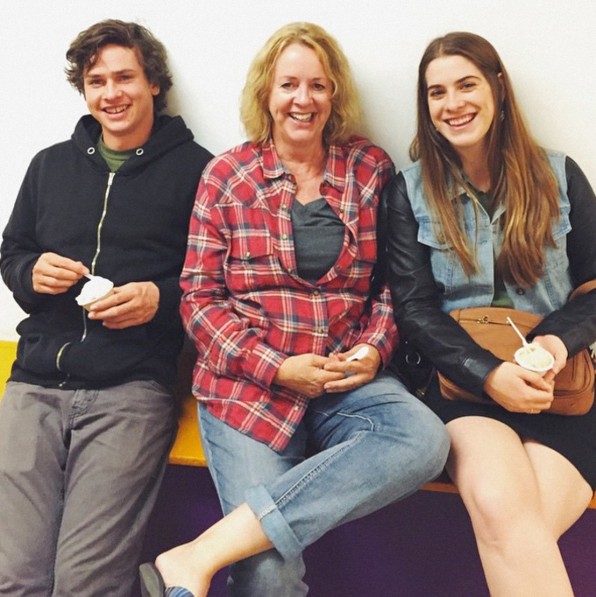
Goulder was curious about her biological father from the outset: Was he alive and good for you? Did he take children or share her features? Her mother didn't accept much data aside from a few biographical details and the name of the facility, which had subsequently shut down. When Jordon tried calling the hospital adjacent door, the operator laughed at her request and muttered something about patient privacy before hanging upward. "I was emotional at the time, then I don't recollect the conversation verbatim," she remembers. "It was enough to stop me from looking for him for quite a while, and caused me to harbor some anger that I may never have access to information virtually my genes."
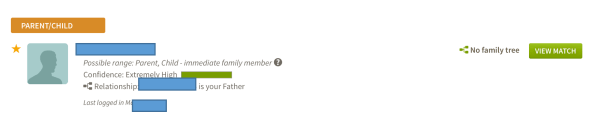
But Goulder didn't surrender for good. She sent in samples of her saliva to various consumer-genetics services, which connect users with their family unit members. On two of these sites, 23andMe and FamilyTreeDNA, she was connected to one of her biological begetter'due south cousins. But AncestryDNA revealed a direct friction match to a man who chose to publish his proper noun, besides as other relatives with the same last name. She quickly found his profile on Facebook, and noted that they shared the same thick, dark eyebrows. From there, she was able to runway downward a daughter who happened to alive nearby in Portland, Oregon. "I know what she looks similar so I expect for her all the fourth dimension, merely also fear that I'll come across her," she says.
Goulder is far from alone in using these services to find a biological parent. Due to a lack of tape keeping, it'due south far from articulate how many children each year are conceived via a sperm or egg donor, although some approximate that it ranges between thirty,000 and lx,000 a year in the U.South. Sites such equally Donor Sibling Registry have popped up to offer communication and a community to donors and donor-conceived people, including guiding them to DNA databases with more 50,000 members where they tin can exist matched with relatives.
"As the database grows, the probability that a user volition detect a shut genetic relative increases," says Ken Chahine, executive vice president at Ancestry. "But it wasn't designed for that purpose."
Goulder attempted to get in bear on with her donor via Facebook and Beginnings's messaging services, but she doesn't know if he received her message. He hasn't logged in for a while. It'southward possible that he doesn't want to know her, has pushed the whole matter out of his mind, or simply doesn't know she's trying to contact him.
Not And then Bearding
In an age of consumer DNA testing, some bioethicists say that it'due south time to revisit the notion of anonymous sperm donation. Is it actually possible in this twenty-four hour period and age to keep a donor'southward identity anonymous? And should the sperm banks practise more to warn potential donors that they might be found if they or a relative submits their Deoxyribonucleic acid to a genealogical service?
"When these sperm banks were set, in that location were often confidentiality agreements in which a prospective father would say that he never wanted to be contacted, or that he'd exist open to it when the kid is eighteen," says Kayte Spector-Bagdady, a postdoctoral enquiry boyfriend at the Heart for Bioethics & Social Sciences in Medicine at the University of Michigan. "Simply services like 23andMe have created an boosted opportunity that supersedes these previous arrangements, where children created by egg or sperm donors can figure it out."
23andMe CEO Anne Wojcicki says that one of the 3 major reasons that people sign up is to find family members: "The adoptive community and sperm donor community are really agile."
At a minimum, Spector-Bagdady recommends that sperm banks disclose this to their potential donors. Others have gone a step further in calling for lawmakers to ban anonymity altogether, arguing that donor offspring similar Goulder should have the right to know the identity of their biological parents.
"If a donor doesn't want to be constitute, they simply shouldn't donate," says Wendy Kramer, director of Donor Sibling Registry, which is a not-for-profit system. "Notwithstanding the sperm banks don't tell prospective donors that because they'll make less money." Kramer says her son was 1 of the primeval users of these sites, and figured out the identity of his donor back in 2005.
One sperm donor I spoke to, who requested anonymity, said he had his own reservations nearly Deoxyribonucleic acid-testing services, only he didn't hash out this with the sperm banking concern. Moreover, as far as he could tell, the facility didn't inquire for references or verify anything he told them nearly his Ivy League education or wellness history.
He had donated sperm on a whim subsequently graduating with a mountain of college debt ("My thinking at the time was that if I got $100 every time I masturbated, that's a skilful bargain"). He put the feel to the back of his mind until our conversation, in which he shared myriad concerns. "They seemed to desire people with attractive qualities, but those people might be sensitive to requests to speak to their mother or their higher," he said. "It was a balancing act of attracting donors, while reducing friction."
According to Kramer, the root of the trouble is the lack of rules or regulation when information technology comes to buying and selling sperm. For instance, the U.S. Nutrient and Drug Administration requires that donors get tested for some communicable diseases, but there is no federal requirement that sperm banks screen for genetic diseases. Every bit a result, testing practices vary widely among dissimilar facilities.
In recent years, cases take hit the headlines where a donor unknowingly has hundreds of children, or wasn't properly tested for various genetic diseases. One family was told that a donor had a clean bill of health, merely their child was born with cystic fibrosis. Both the mother and the donor were carriers of the disease.
Kramer adds that sperm banks are also inconsistent in how they mediate relationships between donors and their offspring. She says that many will send an ambiguous letter in the mail, then call it a day. Cases have reached the courts where sperm banks failed to notify a family unit when a donor gets sick or has a history of disease, or didn't improve their donor'southward medical profile as new medical data came to light.
Of a handful of sperm banks contacted past Fast Company, simply California Cryobank responded to a request for annotate. Company spokesman Scott Brown stressed that the team volition facilitate contact when the kid is 18, if the donor is open to it. He says many donors who requested anonymity are willing.
Chocolate-brown agrees that the rise of commercial Deoxyribonucleic acid testing companies has been transformative, but he doesn't agree that all anonymity should be waived. "It would be unreasonable for a sperm donor today to believe they'll never be contacted," he says. In lite of this, he urges donor offspring to wait until they're 18 and initiate contact through the sperm banking concern rather than through 23andMe, Facebook, and the similar. "That sets upward a difficult and devastating situation for both parties," he says. "If you're going to show up on the guy's doorstep, it could affect his life and jeopardize things for all other offspring that might be waiting the proper amount of time."
Brown says the company will screen potential candidates to bank check if they're a carrier for a variety of genetic diseases, including cystic fibrosis and spinal muscular atrophy.
Ethical Implications
Ancestry'due south team has researched the implications of customers using the service to connect with donor or adoptive parents. Their core mission is to assistance people sympathize their origins. Several years agone, the company invited a group of bioethicists into their offices to figure out what to do. "They were in favor of giving the right information to people, rather than trying to hide it," says Chahine. But all those who register for the site can request anonymity so their identity wouldn't be revealed to a donor offspring, for instance.
23andMe'south Wojcicki says the team has idea nearly means to adequately brainwash users nearly surprising results. Users have learned through the site that they were adopted or donor-conceived, before a parent told them the truth. Research from 2005 found that cases of paternity discrepancy, when a child is identified as being biologically fathered by someone other than the homo who believes he is the begetter, occurs betwixt .eight% to xxx% in the population.
The company's terms and atmospheric condition brand information technology explicitly clear: "This information may evoke strong emotions and has the potential to modify your life and worldview. You may discover things about yourself that problem you and that you may not have the ability to control or modify."
Experts are divided on whether these sites should be doing more to educate and inform their users. Spector-Bagdady commends 23andMe for its explicit linguistic communication, simply is concerned that few people read the terms of service. She has argued in the past that this information is inherently medical, as it relates to family medical histories, and that straight-to-consumer companies have enhanced obligations to return these results more than like clinicians than for-profit businesses. Information technology's unclear how they would do that, every bit these sites don't know ahead of time whether they're delivering surprising results. "From an ethical perspective, information technology'south still very much up for debate," she says.
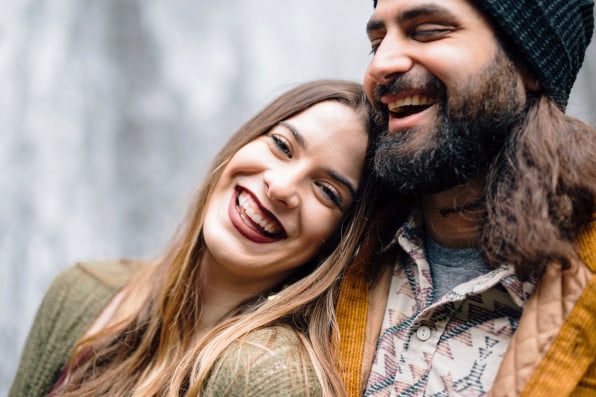
All told, those I spoke to who connected with donor parents or half-siblings relayed more often than not positive experiences. 1 23andMe user in her mid-forties, who goes past the pseudonym Marcia, has bonded with her eight new brothers and sisters. None of them never met their biological male parent, who passed away at a adequately immature age. "This has been a huge and unexpected approving," she says. "You'll detect many people who are angry or experience a loss of identity, but this struck us differently."
Jordon Goulder's nuptials is coming up in a few weeks. For the time existence, she'south hit the pause button on her search for her biological father. She's considering a certified alphabetic character at some point, so at least she'll know if he's received it. Her friends are confident that he submitted Dna to Ancestry, so he must be curious. She'southward keeping her hopes up. "I retrieve information technology will happen somewhen."
Source: https://www.fastcompany.com/3063447/she-found-her-biological-father-on-ancestry-and-23andme
0 Response to "If Adopted How to Look for Biological Family Through Ancestry or Gedmatch"
Post a Comment